Guatapé Travel Guide: Staying on (and Above) the Lake
Guatapé is the trip almost every visitor to Medellín takes: a colorful town on the shore of a vast, island-studded reservoir, watched over by a giant granite rock. Plenty of people see it on a long day tour. It is far better with a night or two — when the day-trippers have left, the water goes still and the hills turn gold. Here is how to plan it.
Where Guatapé is, and what “the lake” really is
Guatapé is a small town in eastern Antioquia, about two hours by road from Medellín. The “lake” is the Peñol-Guatapé reservoir, a hydroelectric reservoir created in the late 1970s. Its flooding submerged the original town of El Peñol, which was rebuilt nearby, and turned the green hills into a maze of inlets, peninsulas and islands. Today it is the region’s favorite place for boating, water sports and long weekends.
The town sits higher than Medellín, so days are pleasant and evenings can feel cool. Pack a light layer, and rain gear for the afternoon showers that are common in the Andes.
Getting there from Medellín
- Private transfer or driver: the most comfortable option for families and groups, and it lets you stop along the way.
- Rental car: the road is paved and well traveled; expect heavier traffic leaving Medellín on Friday afternoons and returning on Sunday or holiday Mondays.
- Bus: regular buses leave from Medellín’s northern bus terminal (Terminal del Norte) for Guatapé and the rock.
Coming from the airport? José María Córdova (MDE) is on the eastern side of the valley, so many travelers go to Guatapé first and finish their trip in the city.
Things to do
Climb El Peñol
La Piedra del Peñol is a huge granite monolith rising above the reservoir. A zig-zag staircase built into a crack in the rock — usually cited as about 740 steps — leads to a viewpoint over the islands and inlets. Go early to beat the heat and the queues, take water, and pace yourself: the altitude makes it a real workout. There is an entrance fee, paid at the base.
Walk the town and its zócalos
Guatapé is famous for its zócalos: brightly painted relief panels along the bottom of house façades, showing animals, trades, family scenes and local history. Wander the streets around the main square and the Plazoleta de los Zócalos, stop for coffee or an ice cream, and walk down to the waterfront malecón at sunset. Tuk-tuks (moto-taxis) are an easy, inexpensive way to get around town and up the hills.
Get out on the water
Boat tours leave from the malecón, ranging from shared launches to private boats. Most loop past the islands, inlets and waterfront homes, and some stop at viewpoints along the way. You can also find kayaks, paddleboards, jet skis and other water sports at docks and lakefront hotels. Always agree on the route, duration and price before setting off, and wear the life jacket provided.
Slow down
The best part of staying over is doing very little: breakfast with mountain views, an afternoon on the water, dinner in town, and a soak under the stars. Two nights is a good minimum; three lets you add a day on the water or a horseback ride without rushing.
Where to stay: town, waterfront or hills?
In town
Staying in the center puts you within walking distance of restaurants, the square and the boat docks. The trade-off is weekend noise and less space — rooms are generally smaller and parking can be tight.
On the waterfront
Lakefront hotels and country houses (fincas) along the shore offer direct water access and sometimes private docks. They are ideal if boating is the point of your trip. Many are spread out along the shoreline, so you will often need a car, a tuk-tuk or a boat to reach town.
In the hills above the lake
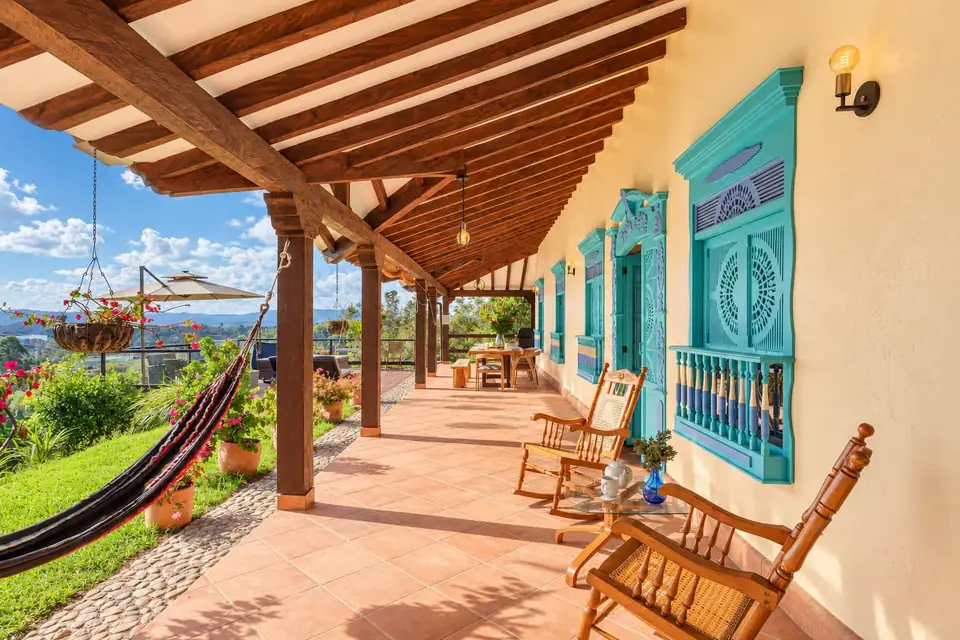
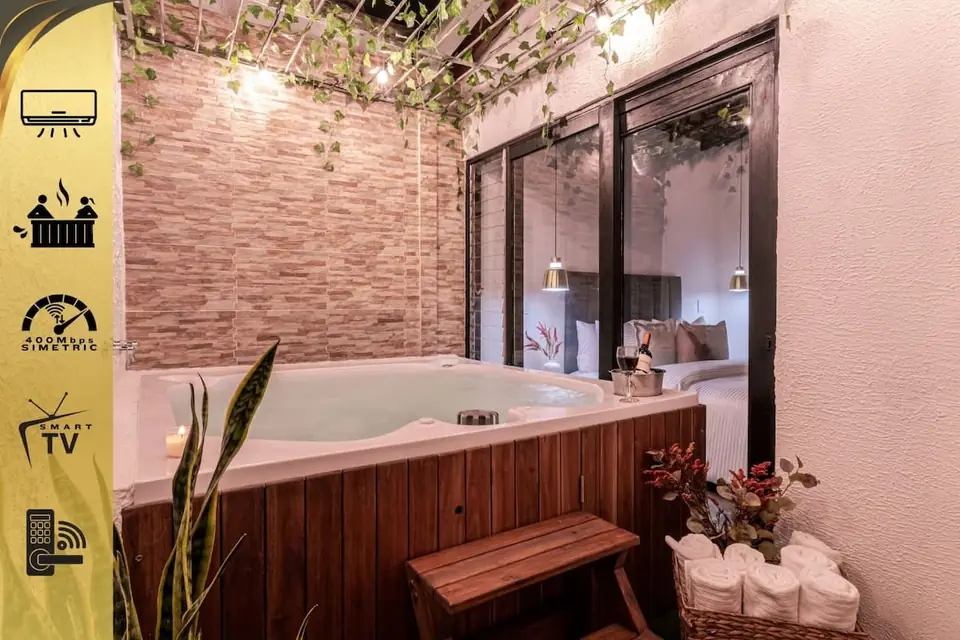
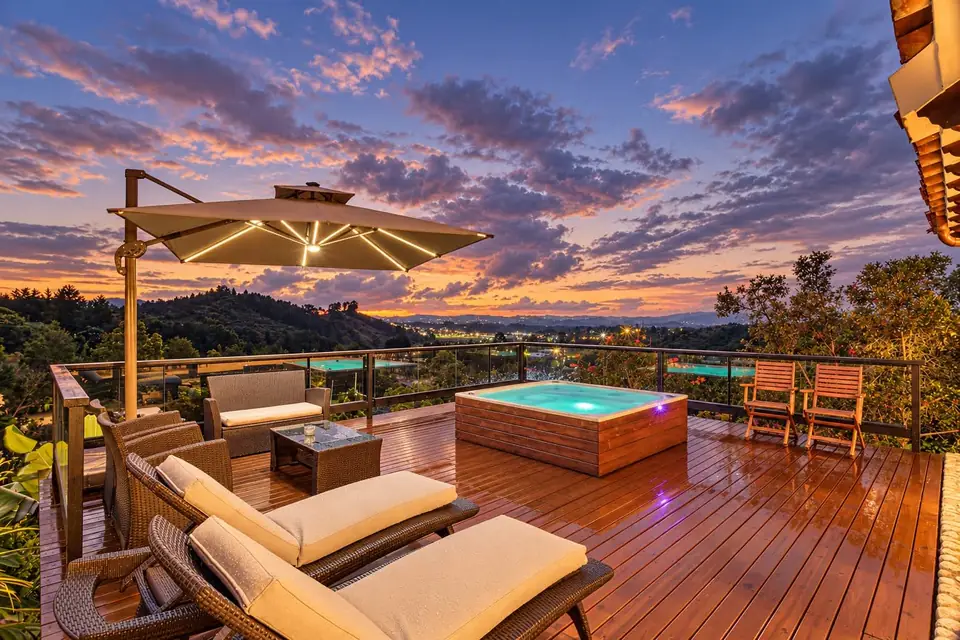
Hillside homes trade direct water access for privacy, quiet and views over the valleys and reservoir. This is our choice: Vista Bonita is a colonial-style hacienda in the forest above Guatapé, about 3.5 km (2.2 miles, 9–10 minutes by car) from the main square. It sleeps eight in three bedrooms, with a private hot tub facing the mountains, a covered corridor with hammocks, a pool table and Starlink internet. It is not a waterfront property — you can glimpse the reservoir, and the docks in town are a short drive away.
How to choose: if you want to swim and boat from your doorstep, pick the waterfront. If you want quiet nights, space and a view, pick the hills. If you have no car and want to walk everywhere, stay in town.
When to go
Guatapé is pleasant all year. Weekends, Colombian public holidays (many of which create long weekends known as puentes), Easter week and the December–January holidays are the busiest; weekdays are noticeably calmer, with shorter lines at the rock. Mornings are usually the clearest time for views.
A simple three-day plan
- Day 1: leave Medellín mid-morning, lunch on the way, check in, and spend the evening at home with a hot tub and a barbecue.
- Day 2: climb El Peñol early, explore the zócalos at midday, take a boat tour in the afternoon, and have dinner in town.
- Day 3: slow breakfast, a final walk or water activity, and back to Medellín — or straight to the airport.
Practical tips
- Carry some cash in Colombian pesos for tuk-tuks, small shops and entrance fees; cards are not accepted everywhere.
- Bring sunscreen and a hat — the sun is strong at altitude, even on cloudy days.
- If you stay outside town, plan dinners ahead or stock the kitchen on the way in.
- As anywhere, keep valuables out of sight and agree on prices before tours and rides.
Combining Guatapé with the city? Read where to stay in El Poblado, or see all our homes.
Frequently asked questions
How far is Guatapé from Medellín?
Guatapé is about two hours by road from Medellín, depending on traffic. Buses leave from Medellín’s northern bus terminal (Terminal del Norte), and private transfers are available.
How many steps does El Peñol have?
The staircase up La Piedra del Peñol is usually cited as about 740 steps. Take water and go early to avoid heat and queues; there is an entrance fee paid at the base.
Is Guatapé worth an overnight stay?
Yes. Staying at least two nights lets you climb the rock early, explore the town and get out on the reservoir without rushing, and enjoy the evenings after the day-tour crowds have left.
Is the lake in Guatapé a natural lake?
No. It is the Peñol-Guatapé reservoir, created for hydroelectric power in the late 1970s. The flooding submerged the original town of El Peñol, which was rebuilt nearby.
Is Vista Bonita on the waterfront?
No. Vista Bonita is a hillside hacienda in the forest above Guatapé with mountain and valley views and a glimpse of the reservoir, about 9–10 minutes by car from the main square and the boat docks.